
How to Search the Shelby County Court Docket
Start with jurisdiction, not a search box. Shelby County splits its records across offices. The Shelby County Clerk of Courts keeps the docket for Common Pleas civil, felony criminal, domestic relations, appeals, and judgment liens. Sidney Municipal Court holds its own records for adult misdemeanors, adult traffic, smaller civil cases, and small claims. Probate and Juvenile sit with their division offices. For Common Pleas, the Clerk's official public-search instructions point to CourtView Justice Solutions eServices, which asks for a CAPTCHA and an agreement before any search controls appear.
Before you type, gather the basics. A court name, a name spelling, or a case number is enough to begin. The County suggests at least three letters of a last name plus one letter of a first name. Its printed Common Pleas pattern looks like 25CR000999. A remote result helps you locate case information, but a certified docket or filed document still has to come from the clerk in charge of the record.
- Choose the court route first: Common Pleas, Sidney Municipal Court, Probate, or Juvenile.
- Open the official CourtView entry for Common Pleas or the Municipal Court's record-search route and complete the CAPTCHA agreement.
- Use a name variation or a known case number, then compare the court and category shown with the case sought.
- For a setting, read the newest dated entry and confirm the court's current date through the responsible court office when needed.
- Ask the clerk for a paper, certified, or older record when the online search cannot supply it.
Note: A missing, limited, or stale search result is a reason to call the clerk. It is not proof that the Shelby County court file never existed.
Shelby County CourtView Search Gateway
The public route into Shelby County's listed Common Pleas docket runs through CourtView Justice Solutions eServices. The welcome screen describes its computerized court information. It asks the visitor to type CAPTCHA letters and click an "I AGREE" acknowledgment. That gate is part of the docket search itself, not an error. What waits past it depends on the case category. Treat field labels as something to read once you are inside rather than to assume in advance. The official Clerk of Courts page names the office behind Common Pleas record work.
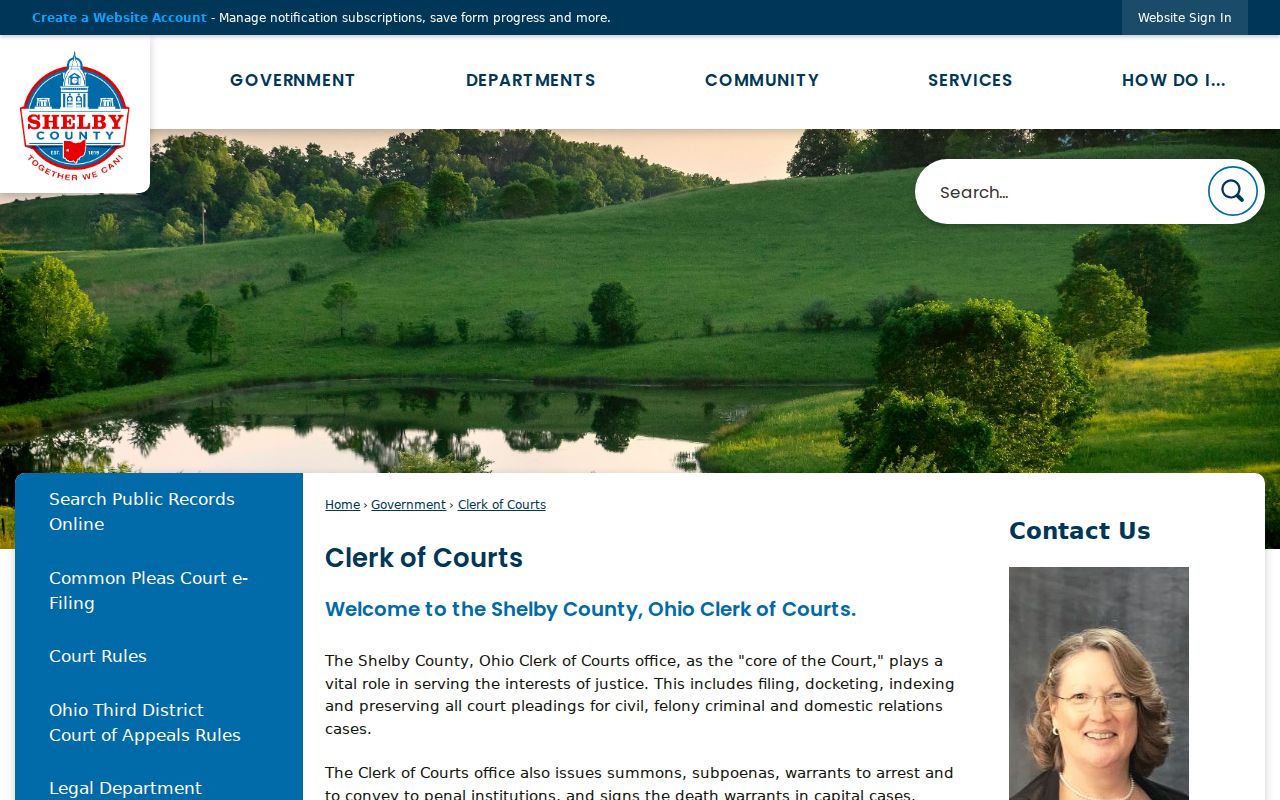
When a Common Pleas search stalls, the Clerk's office is the next stop. It can help with record questions, certified copies, and older files.
What a Court Docket Shows
The clerk keeps a docket as a running court record for each case. It lists filings and court actions in the order they happen, so a Shelby County docket search shows names, a case number, and Common Pleas categories covering criminal, civil, domestic relations, Court of Appeals, and judgment liens. Some detail labels inside CourtView sit behind its gateway and remain unconfirmed. That is why a confirmed search field matters more here than a broad court-record idea.
A docket entry only identifies a document. The order, pleading, or judgment itself may take a direct request. A certified copy is what the clerk authenticates. It is not a download and not a result you view on a screen.
| Case number | A local identifier used to locate a case, such as 25CR000999. |
|---|---|
| Name search | The Clerk documents last-name and first-name letter searches, including minimum character guidance. |
| Case category | Known Common Pleas categories include criminal, civil, domestic relations, appeals, and judgment liens. |
| Docket entry | A dated clerk-maintained notation of a filing or court action; specific CourtView event labels were not verified. |
| Setting | A court date or event whose current status is best checked through the latest dated entry and the court office. |
| Certified record | An official copy obtained from the court clerk, separate from a public-search display. |
Shelby County Docket Terms
Local wording matters here. It separates the online index from the paper or electronic record the office actually holds. The Clerk says it files, dockets, indexes, and preserves Common Pleas pleadings. Sidney Municipal Court points to computerized case information through its own CourtView route. The terms that follow describe the local process as documented, without claiming each word is a label you will see on a portal.
- Public Record Search
- Shelby's name for the Clerk's remote case-information route.
- Continuance
- A request to move a proceeding that changes the setting only when the court grants it.
- Date certain
- The new specified date that a granted Common Pleas continuance entry must include.
- Judge Access Only
- The local-rule notation for a sealed filing retained at the Clerk's office with limited access.
- Direct access
- Inspection or copying at the office where a court record is made available during business hours.
Which Courts Keep Dockets
Shelby County keeps no single master file. The court that holds the case decides the clerk route. It also decides what your docket search will return. Common Pleas handles felony criminal, major civil, domestic relations, probate, and juvenile divisions. Sidney Municipal Court takes adult misdemeanor and traffic cases. It also takes civil matters under its monetary limit and small claims. The County court directory lists the courthouse-based divisions.
| Court | Docket covers | Where to search |
|---|---|---|
| Common Pleas General and Domestic Relations | Felony, serious civil, domestic relations, appeals, and judgment liens | Clerk CourtView route, then the third-floor Clerk office |
| Sidney Municipal Court | Adult misdemeanors, adult traffic, civil to $15,000, and small claims to $6,000 | Municipal Court CourtView route and Municipal Clerk |
| Probate and Juvenile Divisions | Probate matters, juvenile cases, and under-18 traffic | Direct division clerk request at the courthouse |
| Third District Court of Appeals | Appeal docket after the appropriate local case route | Clerk appeal category and the appellate court route |
The County's directory places Common Pleas, Probate, and Juvenile in the courthouse.
That directory is why the local rule works: pick the division first, then run the case lookup.
Shelby County Case Number Clues
The Clerk's printed Common Pleas example, 25CR000999, works well as a format check. That help applies when you already have a number. Shelby County also lists CR, CV, DV, DS, SA, and SL among its code examples. It does not explain the letter pairs. Use the number exactly as the court holds it. Treat the court and case category as the real description rather than the code abbreviation. The Court of Appeals uses its own example, 1720250099.
Name searches need the same patience. The official instruction prefers spelling variations. It also requires at least three last-name letters plus one first-name letter. With only a surname, follow the documented character guidance. If a Common Pleas record still stays hidden, ask the Clerk for help.
Finding Court Dates and Settings
Shelby County publishes no separate searchable daily calendar for Common Pleas. The dependable route is the official case-information system first, then the court or Clerk itself. An older event sitting in a record does not confirm that a setting still stands. Look instead for the latest dated order or a granted continuance entry, since local rules require a new date certain whenever a continuance is granted.
Sidney Municipal traffic cases start with the date printed on the citation. Juvenile traffic hearing notices go out by mail. For a fuller walk through confirmation options, see the Shelby County court calendar reference, and verify any pending setting with the office that holds the case.
Shelby County Docket Date Changes
A filed motion and a granted change are two different things on a docket. Shelby County Common Pleas local rules spell out the difference. For a granted continuance, the applicant must prepare an entry with the reason, the requesting attorney, and a new date certain from the Assignment Commissioner. That entry is what you can trust. The newest granted entry beats an older calendar listing every time. When a motion needs an oral hearing, the movant gets the hearing date at filing under the same local rules.
Weather can move a court date too. The county's January 2026 closure notice covered the Clerk, Common Pleas, Juvenile, and Probate offices. A closure alone does not set a make-up date. Ask the responsible court or clerk to confirm when your hearing will happen.
Public Access to Dockets
Ohio court records are presumed open under the Rules of Superintendence. The openness is limited only by rules on remote access, personal identifiers, sealing, and restriction. The Ohio Public Records Act adds its own framework for inspecting and copying records at a public office. In Shelby County, what you can see remotely may be narrower than what you can see at the clerk counter. For example, the Clerk keeps certain protection-order details out of the public web search. That way a protected party's identity is not published.
Key Rules:
Ohio Sup.R. 11.09 - Court records are generally available to the public unless an access rule or exception applies.
Ohio Sup.R. 11.11-11.14 - Direct and remote access may differ, and sensitive identifiers or records can be restricted.
Ohio Revised Code 149.43 - Public records are generally available for inspection and copying unless an exception applies.
Ohio Revised Code 2953.32 - Eligible adult records may be sealed or expunged through the statutory court process.
Shelby County Online Search Gaps
The Shelby County online system answers many questions but not all of them. Per the Clerk, Common Pleas records before October 1, 1987 are not online. Those cases require a visit during regular business hours. The web search also leaves out civil stalking, sexually oriented offense protection orders, and domestic violence protection orders. These exclusions shield sensitive identities. They also make the counter the only route to certain records.
Probate and Juvenile offer no public web case-search portal. Juvenile records are often confidential, though the rules allow specified exceptions. The Probate and Juvenile division's public-record policy permits direct inspection or copying when a record is accessible. So a blank online result may simply mean the case is old, protected, or held elsewhere. It does not mean no record exists.
Shelby County E-Filing Is Separate
CourtView hosts both e-filing and public docket searching for Shelby County Common Pleas. The two serve different needs. The Common Pleas e-filing instructions spell out the rules. You must be a registered filer approved by the Clerk, file PDFs, type data in capital letters, and pay filing fees by credit card. None of that applies to a case lookup. The public search route needs no e-filing account. E-filing by itself never completes service of process.
So skip the filing credentials if you only want case information. Use the public docket search or go straight to the Clerk. The Common Pleas Court page names the local court. That court works with the Clerk's docket system.
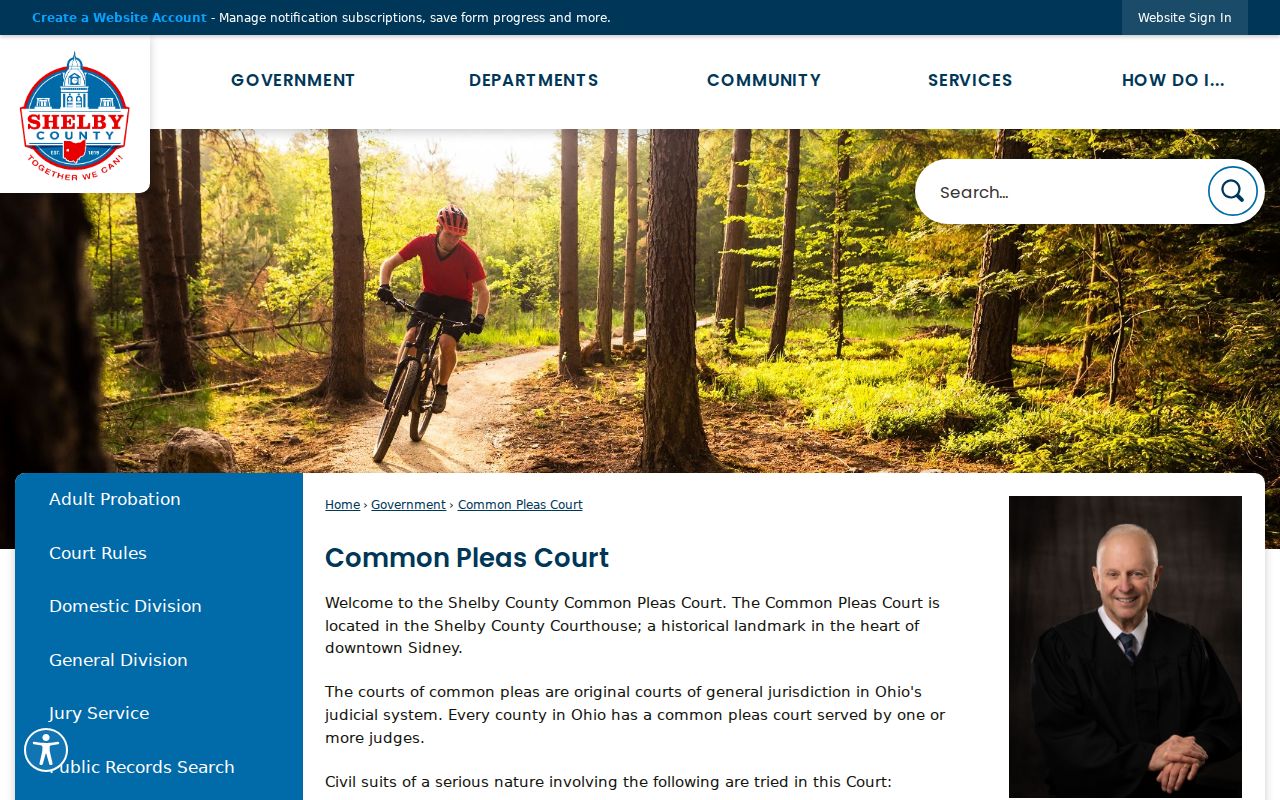
The court and the Clerk are related local channels. Even so, a case search, a filing, and a certified-copy request remain three distinct tasks.
The Clerk and Docket Records
Michele K. Mumford serves as Shelby County Clerk of Courts. The Clerk files, dockets, indexes, and preserves Common Pleas civil, felony criminal, and domestic relations pleadings. Appeals and judgment liens also run through the office. For a Common Pleas docket, a case document, or an authenticated record, the Legal Department is the right stop. No special form is required. A request should just identify the court, the case number when known, the record wanted, and whether a plain or certified copy is needed.
Shelby County Clerk of Courts
Common Pleas Court, third floor
100 E. Court Street
Sidney, OH 45365
937-498-7221
Note: Clerk policy calls for prompt inspection and reasonable copy production. Exact timing depends on the request's size, storage, and review needs.
Shelby County Clerk Copy Choices
Copy type changes the price. At the Common Pleas Legal Department, an ordinary copy runs $0.10 per page. A certified copy costs $1 per page plus a $1 computerization fee per document. An exemplified judgment copy is $4. Those are Common Pleas Clerk figures, not a blanket price for every local court. Probate and Juvenile charge $0.10 per page for public copies. Email delivery of an accessible record costs nothing. Sidney Municipal Court's 2026 civil cost sheet lists certified copies at $2 per page.
| Common Pleas Clerk item | Known current amount |
|---|---|
| Plain copy | $0.10 per page |
| Certified copy | $1 per page plus $1 computerization fee per document |
| Exemplified copy of judgment | $4 |
| Certificate of judgment preparation | $5 |
| Recording on flash or thumb drive | $10 |
Shelby County Courts in Ohio
Ohio keeps trial-court records locally. No statewide index replaces the Shelby County clerk and court routes for case dockets. The Ohio Supreme Court's eStats system reports caseload and timeliness figures court by court. It does not cover individual dockets. Its selector lists Shelby Co. CP, Gen/DR, Shelby Co. CP, Prob/Juv, and Sidney MC. Reporting is required under Sup.R. 5.30, though no current numerical caseload report appears on the page. Ohio's trial-court directory helps map the state court structure around Shelby County.
The directory shows why the right local office matters more than a presumed statewide lookup. Ohio eStats Public Reports is the official caseload-report source for the named Shelby courts.
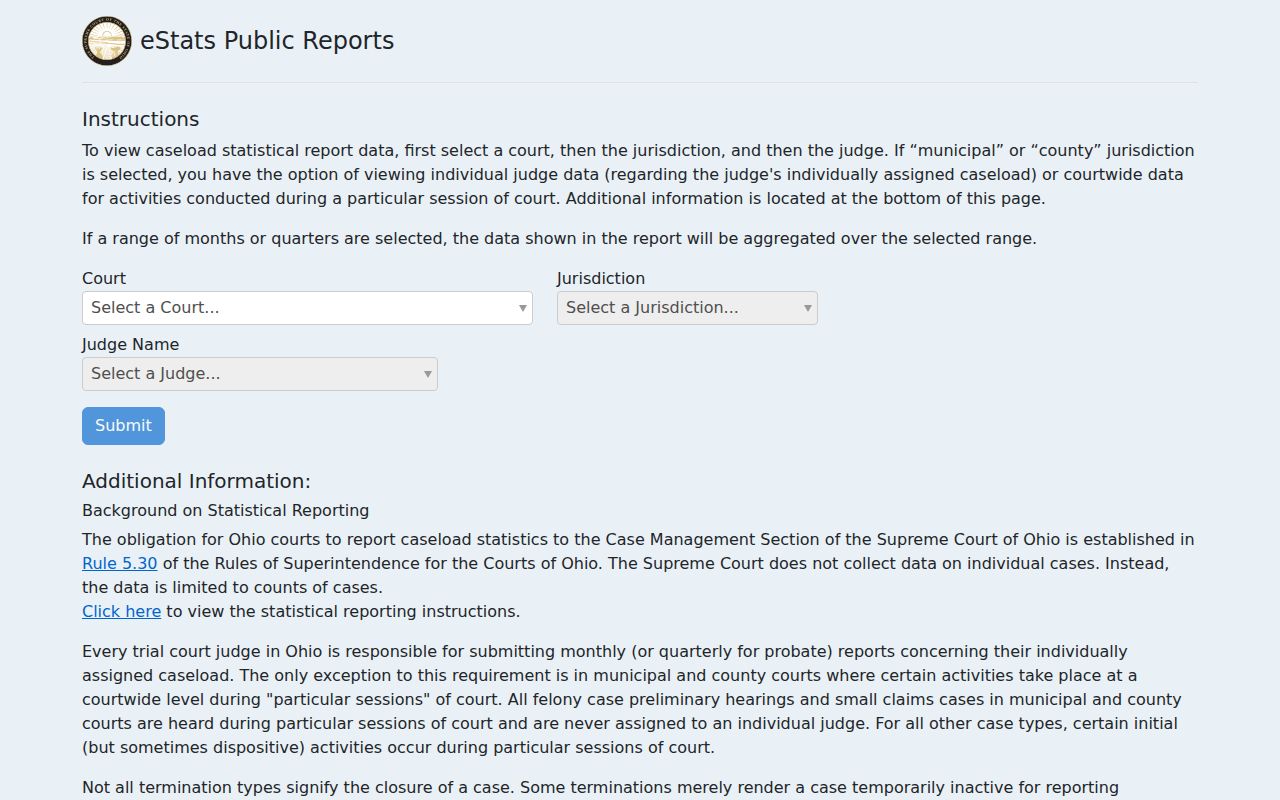
eStats gives reporting context for Shelby courts. It does not replace their individual case dockets.
Sidney Municipal Court Serves Shelby County
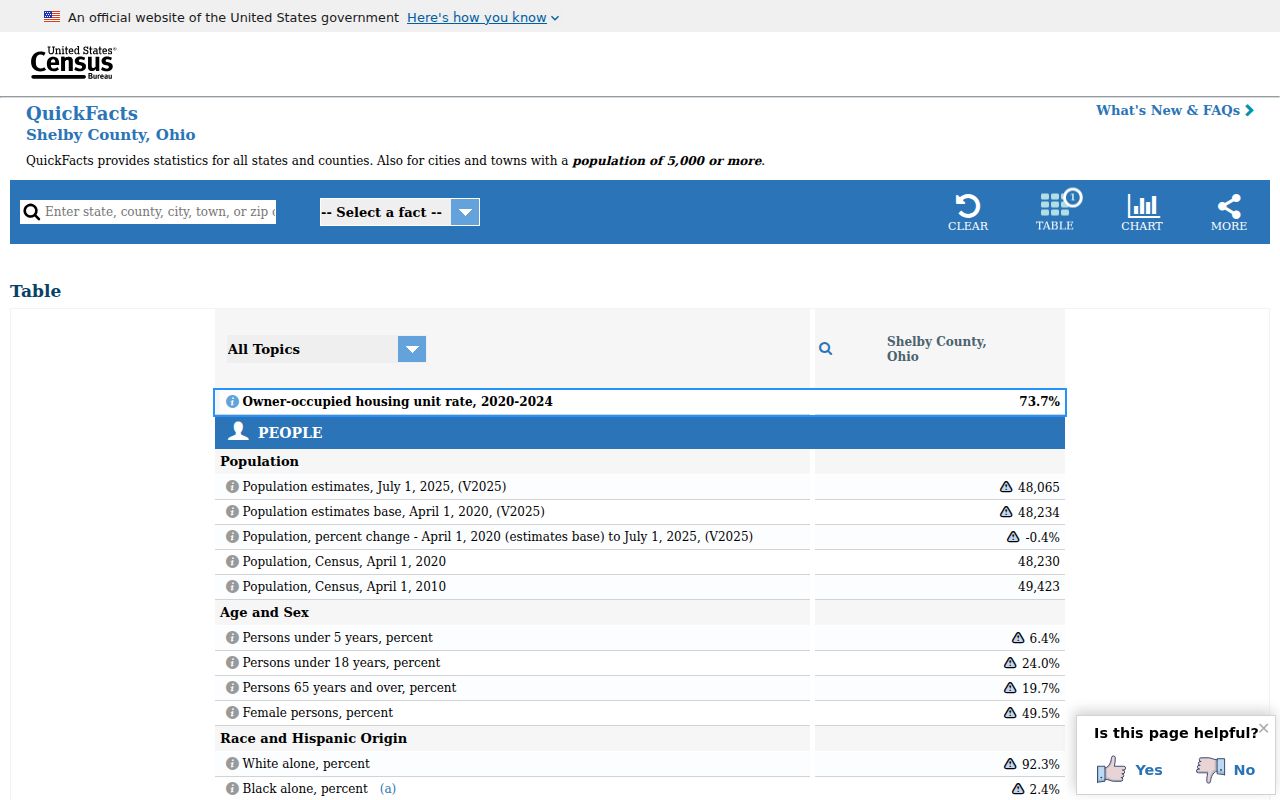
Sidney is the county seat, but do not read that as city-only reach. The Sidney Municipal Court actually serves all of Shelby County. It handles adult misdemeanor criminal cases and adult misdemeanor traffic cases. These apply no matter where in the county they arise. Civil claims up to $15,000 land here too. Small claims up to $6,000 also belong here. The court runs its own online payment and record-search entry. It keeps its own Clerk. It also offers a separate route for questions about municipal cases. Population figures back up Sidney's central role. The Census Bureau's Shelby County profile counts 48,230 people in the 2020 Census. The same profile lists a July 1, 2025 estimate of 48,065.
Shelby County's court setup is compact. Still, any docket search goes smoother once you know whether a case belongs to Common Pleas, Municipal Court, Probate, or Juvenile.
Court Dockets by City in Shelby County
Shelby County contains one incorporated city: Sidney. The Ohio Secretary of State roster keeps Sidney apart from the county's villages. As county seat, Sidney hosts the Municipal Court. Yet that court's docket covers designated adult traffic, misdemeanor, civil, and small-claims cases across the whole county. The city page spotlights the Municipal Court's local record and payment routes. Anything outside its jurisdiction moves to the right county division.
Sidney Court Docket
2020 Census population 20,589; the Sidney Municipal Court serves designated matters across Shelby County.
Map and Directions to the Shelby County Courthouse
Common Pleas civil, felony criminal, and domestic relations dockets, along with Probate and Juvenile records, are kept at the Shelby County Courthouse, 100 E. Court Street in downtown Sidney. The elected Clerk of Courts' Legal Department is on the third floor, phone 937-498-7221, and Juvenile Court is on the second floor, phone 937-498-7255. Sidney Municipal Court, which handles countywide adult misdemeanor criminal, adult traffic, and lower-value civil and small-claims matters, is a separate building two blocks away at 110 W. Court Street.
Shelby County Clerk of Courts
Common Pleas Court, third floor
100 E. Court Street
Sidney, OH 45365
937-498-7221
Monday through Thursday, 8:30 a.m. to 4:00 p.m.; Friday, 8:30 a.m. to noon.
Sidney Municipal Court
110 W. Court Street
Sidney, OH 45365
937-498-0011
Monday through Friday, 8:00 a.m. to 4:00 p.m.
All people and property entering the courthouse are subject to search under the local rules. No official source documents a parking policy, public-terminal location, or general cell-phone rule, so calling the Clerk's third-floor office ahead of a visit is the safer plan, particularly since Common Pleas' own public hours end at noon on Fridays.